
Our Programmes
🌸 Ages 2–3 Years · Pre-Kindergarten
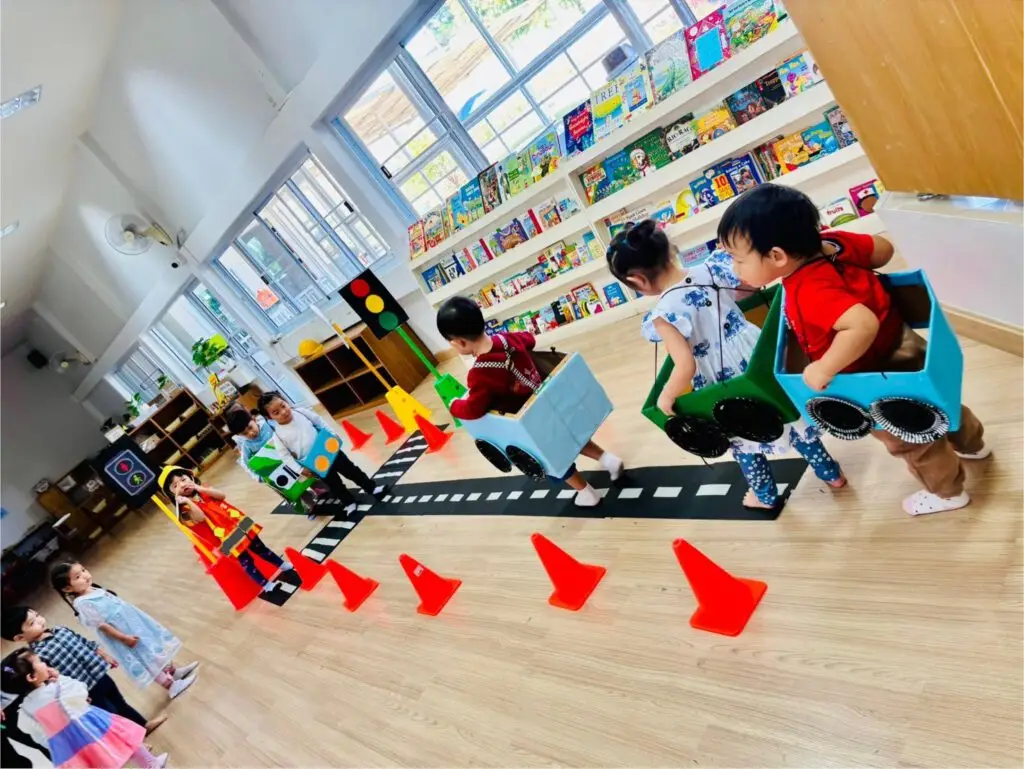
At Siriaunda School, we believe that every child is a capable and curious learner. Rooted in our commitment to nurturing holistic development, our curriculum draws inspiration from globally respected educational frameworks, including the Singapore Nurturing Early Learners Framework.
It is thoughtfully designed to support the physical, emotional, social, cognitive, and creative growth of our young learners, preparing them for a lifelong journey of learning.
"Siriaunda School is the first kindergarten in Thailand to implement Vygotsky's 'Key to Learning' Curriculum — an early childhood programme grounded in the educational and developmental theories of Vygotsky."
Our Pre-Kindergarten Programme is built on the principles of creative play and the multiple intelligences of children. We utilise thematic activities integrated with Story-based Approach and Vygotsky's "Key to Learning" Early Childhood Programme and sensorial learning to foster the various developmental areas of our children.
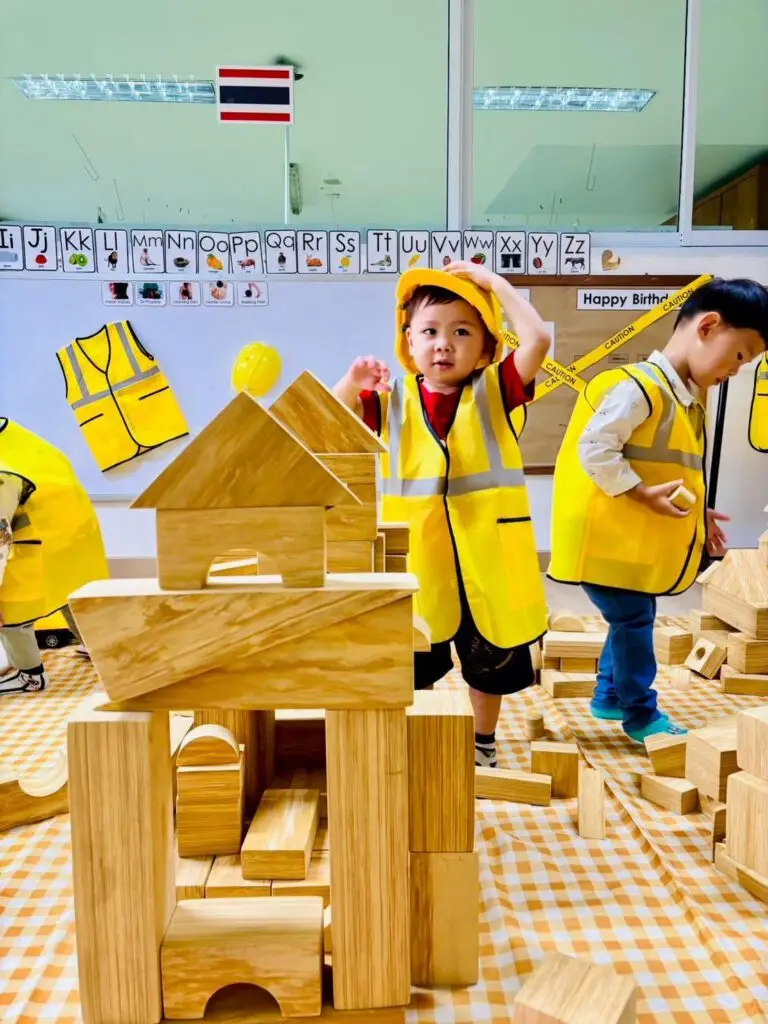
Our goal is to help children develop language, numeracy, and social skills through an integrated learning process that emphasises creative play and critical thinking. The programme includes engaging activities such as art and craft, construction, cookery, dramatic play, music and movement, outdoor activities, physical development, sand and water play, and storytelling sessions.
Language Development
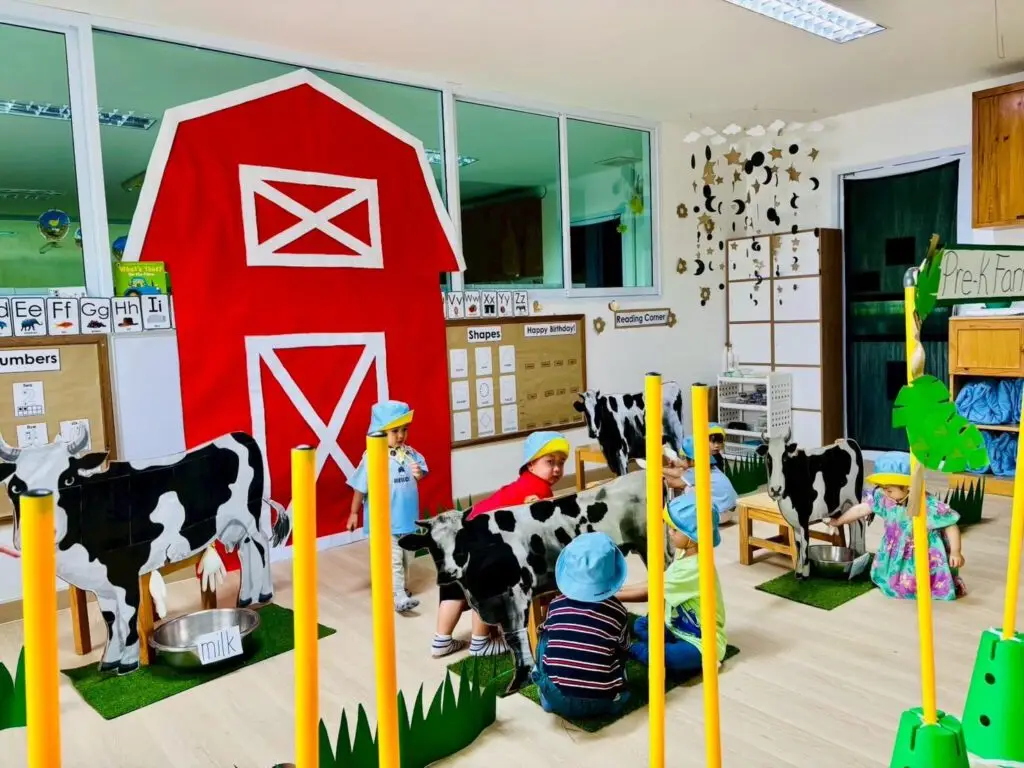
Our Pre-Kindergarten English Programme employs the Multiple Intelligences Approach (Howard Gardner, US), Play-based Learning, Nature-based Learning, and the Story-Based Approach to help our children speak and understand the English language.
We also aim to assist our children in starting with letter recognition of the English alphabet and introducing a rich repertoire of vocabulary through sensorial learning and elaborate dramatic play.
Numeracy Foundation
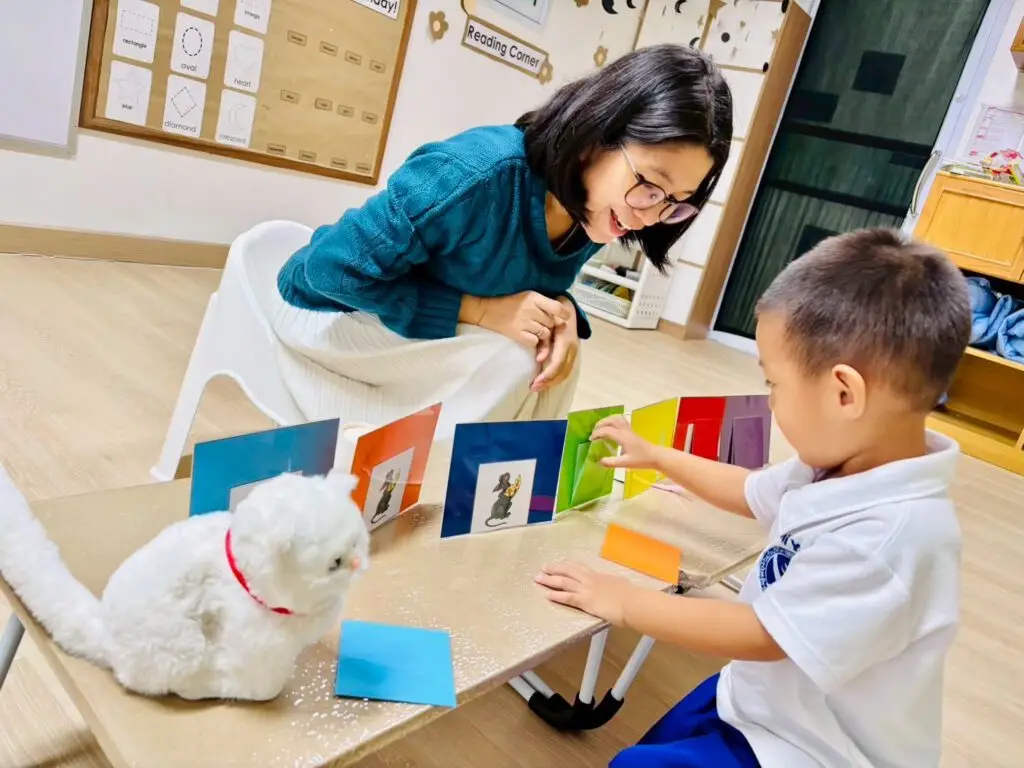
Our Pre-Kindergarten Mathematics Programme aims to teach our children to recognise and apply fundamental sensory standards of colour, shape, and size.
It embeds essential conceptual learning in carefully structured and sequenced everyday activities. The tasks offer systematic procedures for developing foundational mathematical understanding.
Imagination & Critical Thinking
The Story-Based Approach is an educational method that seamlessly integrates storytelling into the learning process. This approach harnesses the power of narrative to engage learners, making concepts more relatable and memorable.
It offers children the opportunity to develop problem-solving skills, critical thinking, creativity, emotional intelligence, and more lifelong skills that will aid them in the future. It also fosters high motivation, active participation, and cooperation among children.
Cognitive Development
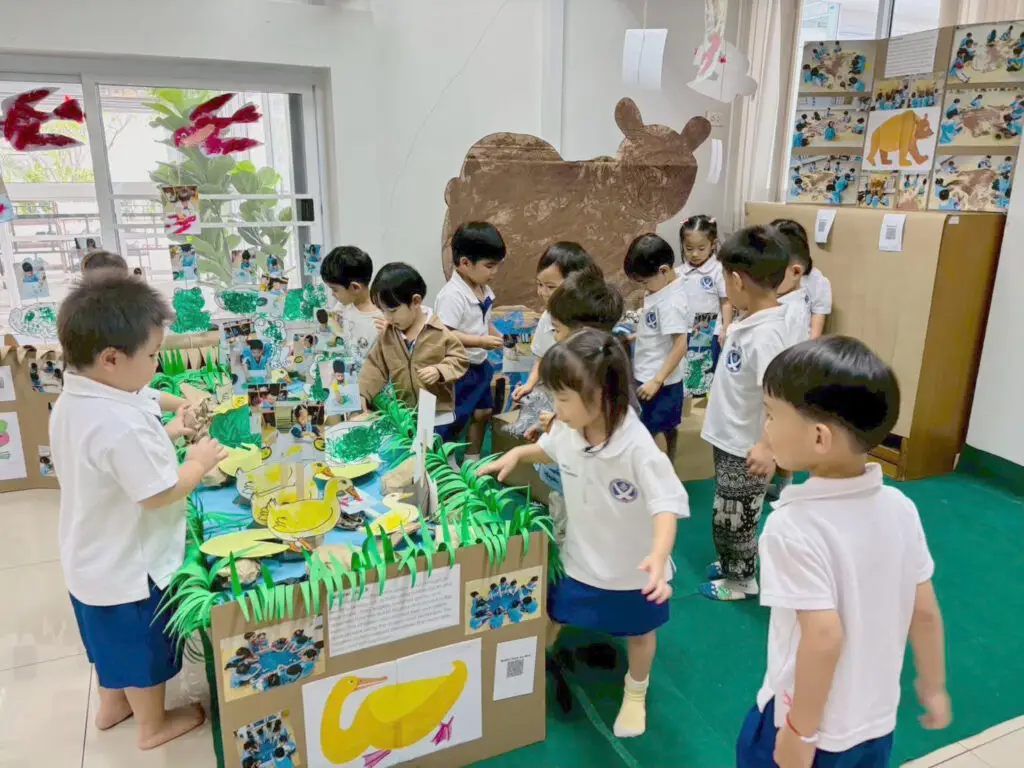
The Vygotsky Key to Learning Curriculum focuses on the "how" of learning and was created by a world-class team of developmental psychologists and educators.
Vygotsky believed that true education is not merely the acquisition of specific knowledge and skills, but the development of children's learning abilities — their capacity to think clearly and creatively, plan and implement those plans, and communicate their understanding in various ways.
This programme is now widely used in England, Scotland, Wales, Poland, the USA, Puerto Rico, Singapore, Indonesia, Malaysia, South Africa, Russia, India, and Thailand.
Develops fine motor control, spatial awareness, and creative expression through drawing, mark-making, and visual modelling of the world around them.
Builds emotional intelligence and non-verbal communication through movement, gestures, and imaginative bodily representations.
Teaches children to recognise and apply fundamental sensory standards of colour, shape, and size — the foundation of mathematical thinking.
A comprehensive programme of developmental games, stories, rhymes, and activities to improve fine motor skills, language, and handwriting.
Independent Exploration
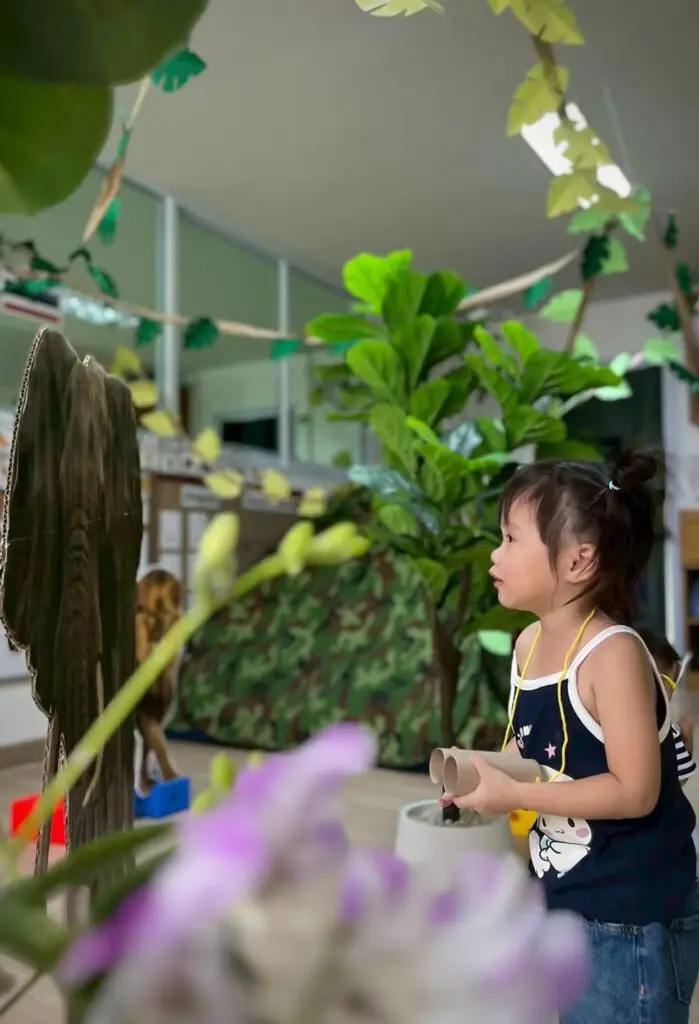
Various learning centres are set up in the classrooms to provide opportunities for independent learning. Learning centres offer a variety of activities and materials that cater to the multiple intelligences of children.
Children can choose to go to the learning centres that interest them, nurturing autonomy and self-directed exploration.
Visit our campus, meet our teachers, and see our Pre-Kindergarten programme in action. We would love to welcome you to the Siriaunda family.